Contact Card or Reward Card - Which Should You Offer?
Not every content request needs a discount attached.
82DASH gives you two options when a customer submits:
a reward card with a promo code, or a contact card
that puts your brand in their wallet without a reward. Here's when each one makes sense.
Rewards guide
6 min read · Updated July 2026
In this guide
When you set up a content request in 82DASH, one of the choices you make is what the customer receives after they submit. Most people go straight for the reward - a discount code, a promo voucher, something tangible. That makes sense. Rewards drive response rates.
But there’s a second option that’s easy to overlook: the contact card.
A contact card doesn’t include a reward or discount. Instead, it gives the customer a branded digital card that saves to their Apple or Google Wallet - with your business details, branding, and a direct connection to your push notification channel.
No promo code. No discount. Just your brand, on their phone, permanently.
It sounds like less. In many cases, it’s actually more.
What the contact card actually is
When a customer submits content and receives a contact card, here’s what happens:
A branded card is saved to their Apple or Google Wallet. It carries your logo, your brand colours, and your business information. It sits alongside their bank cards, boarding passes, and loyalty cards.
From your side, you now have a direct push notification channel to that customer. You can send messages to their lock screen whenever you want - new products, events, seasonal promotions, or future content requests. The open rates on wallet pass push notifications sit at 90%+, which is a different universe from email.
The contact card is your brand’s permanent presence on someone’s phone. That’s the value.
What the reward card does differently
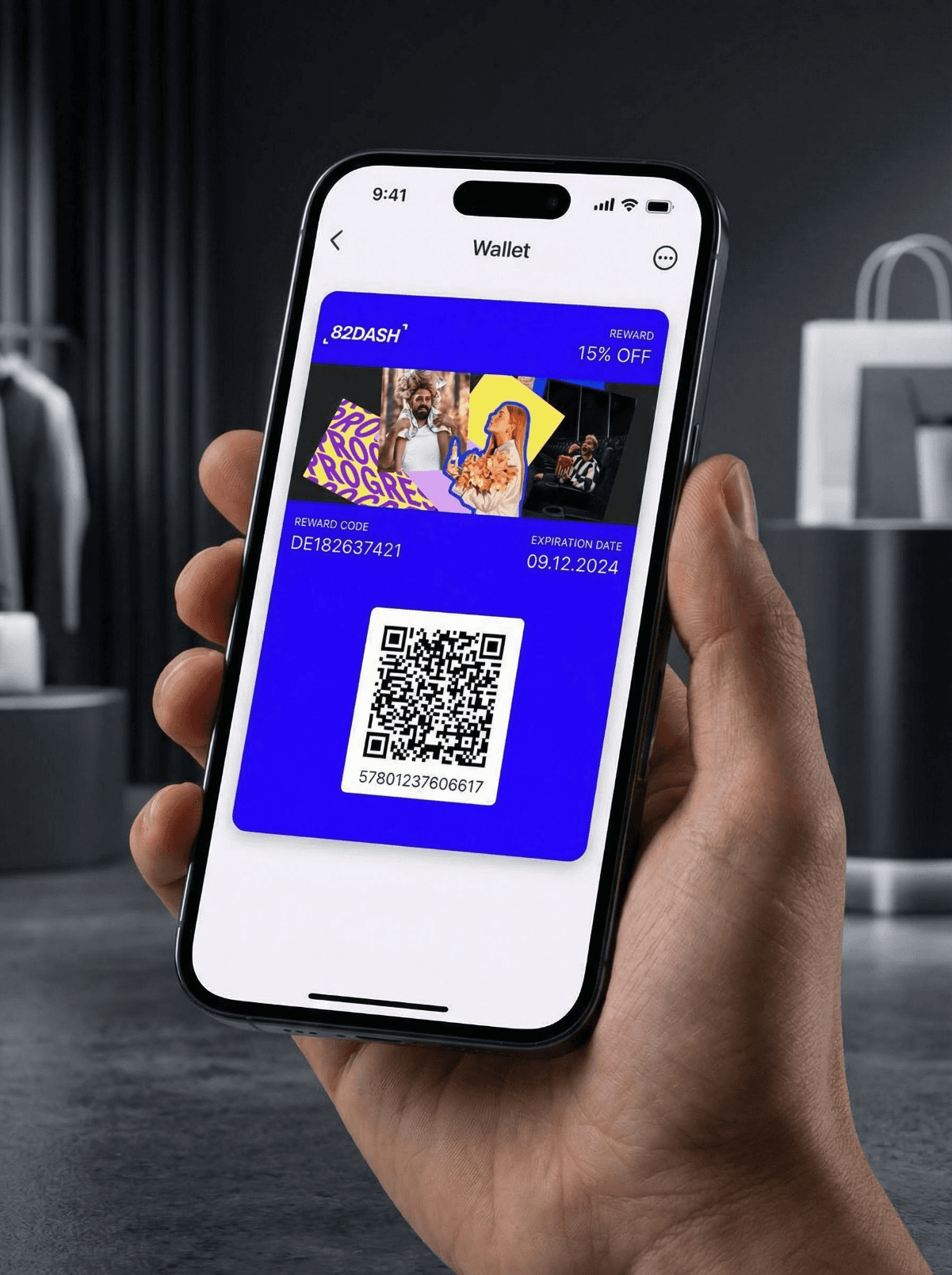
The reward card does everything the contact card does - wallet pass, branding, push notification channel - but it also includes a reward. A discount code, a promo voucher, a free item, or whatever you’ve configured.
The reward is delivered instantly when the customer submits. It’s visible on the card itself, ready to use.
So the reward card is the contact card plus an incentive. Why would you ever choose just the contact card?
When to choose the contact card
There are several scenarios where a contact card makes more sense than attaching a reward.
When discounts would cheapen your brand
Luxury brands, premium services, and high-end hospitality businesses often don’t want to be associated with discount codes. If you’re a boutique hotel, offering “10% off your next stay” after someone shares a photo can feel off-brand. It turns a genuine moment into a transaction.
A contact card lets you thank the customer, get into their wallet, and maintain the premium positioning. You’re saying “we’d love to stay in touch” rather than “here’s a coupon.”
When you’re collecting content from non-customers
Not every person submitting content is a paying customer. You might be collecting content at events, pop-ups, trade shows, or public spaces. A discount code for your shop doesn’t mean much to someone who just walked past your stand at a market.
A contact card makes more sense here. They’ve engaged with your brand, they now have your card on their phone, and you can reach them with a push notification when you’ve got something relevant to share - an upcoming event, a product launch, an invitation.
When the content itself is the motivation
Some customers don’t need a reward. They’re excited about your product, they want to share their experience, and the act of contributing is enough. In these cases, attaching a discount can actually feel reductive - like you’re paying them for something they were happy to do for free.
The contact card acknowledges their contribution without making it transactional. And you still get the wallet pass and push channel, which is the real long-term value anyway.
When you want honest feedback
This one is easy to overlook. If you’re collecting reviews, NPS scores, feedback forms, or any kind of opinion - attaching a reward can bias what people tell you. Nobody wants to criticise your product and then claim a discount in the same breath. The reward, even subconsciously, nudges people towards positive responses.
If honest, unbiased feedback is what you’re after, a contact card is the better choice. The customer submits their feedback, gets your card in their wallet, and you still have the push notification channel for follow-up. But their answers aren’t coloured by the prospect of a reward. You get what they actually think, not what they think you want to hear.
This matters especially for NPS surveys and product feedback where the whole point is to learn what needs improving. Biased data is worse than no data.
When you want to keep your margins intact
Rewards cost money. A 10% discount code that gets redeemed is a real cost to your business. If you’re running content collection at scale - hundreds or thousands of submissions a month - those discounts add up.
Contact cards cost nothing to issue. You still get the content, you still get the wallet pass, you still get the push notification channel. You just don’t have the cost of the discount.
This doesn’t mean you should never reward people. It means you should think about when the reward is the right tool and when the contact card achieves the same goal at lower cost.
When you’re building a community, not running a promotion
If your goal is to involve customers in your brand rather than drive immediate repeat purchases, the contact card fits better. You’re not buying their content with a discount. You’re inviting them into a relationship.
This works particularly well for brands with strong communities - fitness brands, food brands, creative businesses, local independents. The customers who submit content for these brands often do it because they feel connected, not because they want 10% off.
When to choose the reward card
The reward card is the right choice when:
You want maximum response rates. Rewards drive submissions. If volume matters - and for most content collection campaigns, it does - a reward card will outperform a contact card every time. The instant gratification of getting a discount code the moment you submit is a powerful motivator.
You’re collecting from first-time or casual customers. People who don’t know your brand well need a reason to bother. A reward gives them that reason. Once they’ve submitted and had a positive experience, the relationship is started - but the reward is what got them through the door.
You want to drive repeat purchases. A discount code isn’t just a thank-you. It’s a reason to come back and buy again. For ecommerce brands and hospitality businesses, the reward pays for itself when it converts a one-time buyer into a repeat customer.
You’re collecting high-effort content. Video testimonials, detailed reviews, and long-form feedback take real time. Asking someone to record a video and offering nothing in return is a big ask. A reward makes the exchange fair.
Can you use both?
Yes, and this is where it gets interesting.
You might run one content request with a reward card (targeted at all customers, focused on volume) and a separate request with a contact card (targeted at your most engaged customers, focused on community building).
Or you might start with reward cards to build your wallet pass base, then switch to contact cards for follow-up requests once those customers are already in your ecosystem. They’ve already been rewarded once. Now the relationship is established, and a contact card is enough for the next interaction.
You can also vary by content type. Photos (low effort) could earn a contact card. Videos (high effort) could earn a reward card. Match the incentive to the ask.
The bigger picture
Whether you choose a contact card or a reward card, the most important thing is the same: your brand ends up in the customer’s Apple or Google Wallet.
That wallet pass is the real asset. It gives you push notifications with 90%+ open rates. It keeps your brand visible on their phone every time they scroll past their wallet. It creates a direct channel that doesn’t depend on email deliverability, social media algorithms, or paid advertising.
The contact card gets you there without the cost of a reward. The reward card gets you there with higher response rates. Both get you there.
And once you’re there, you can do everything: send future content requests, promote new products, announce events, share updates. The wallet pass is the gateway. The card type is just how you walk through it.
Collecting customer intelligence along the way
Whichever card type you choose, don’t forget that every content request in 82DASH can include form fields. A couple of quick questions alongside the photo or video - about the product, the experience, what they’d like to see next - gives you customer insight that no amount of analytics can replicate.
You’re asking people directly, at the moment they’re most engaged, and the answers come in alongside the content. That’s free market research, delivered automatically, at scale.
Offer the right card and build the relationship.
Start collecting content →